
HOW MUCH ELECTRICITY DOES A TUMBLE DRYER USE AND HOW TO REDUCE CONSUMPTION IN WINTER
During the winter months, when laundry dries more slowly by natural means, a tumble dryer becomes a great ally in the household. Still, one question always arises: how much electricity does a dryer actually use, and is it smart to use it frequently?
In this article, we explain real electricity consumption, the differences between dryer types, and provide practical tips on how to keep your electricity bill under control—even during the cold months.
How much electricity does a tumble dryer use?
Electricity consumption depends on the technology and how the dryer is used, but average values are as follows:
- Conventional condenser dryer: around 3 to 4 kWh per cycle
- Heat pump dryer: around 1 to 2 kWh per cycle
If you use the dryer 3 to 4 times a week, the difference in monthly consumption can be quite noticeable.
————————————————————————————————————————–
Practical example:
A heat pump dryer with 4 cycles per week uses about 25–30 kWh per month
A conventional condenser dryer under the same conditions can use up to 60 kWh per month
————————————————————————————————————————–
What affects electricity consumption?
Dryer consumption does not depend only on the model, but also on:
- the energy efficiency class
- the type of dryer (condenser or heat pump)
- the amount and moisture level of the laundry
- the selected drying program
- regular maintenance of filters and the condenser
Often, higher electricity consumption is caused by improper use rather than the technology itself.
Difference between a condenser dryer and a heat pump dryer
Condenser dryer
- lower purchase price
- shorter cycles
- higher electricity consumption
- heats up the room more
Heat pump dryer
- higher initial investment
- longer but much more energy-efficient cycles
- significantly lower electricity consumption
- gentler drying for fabrics
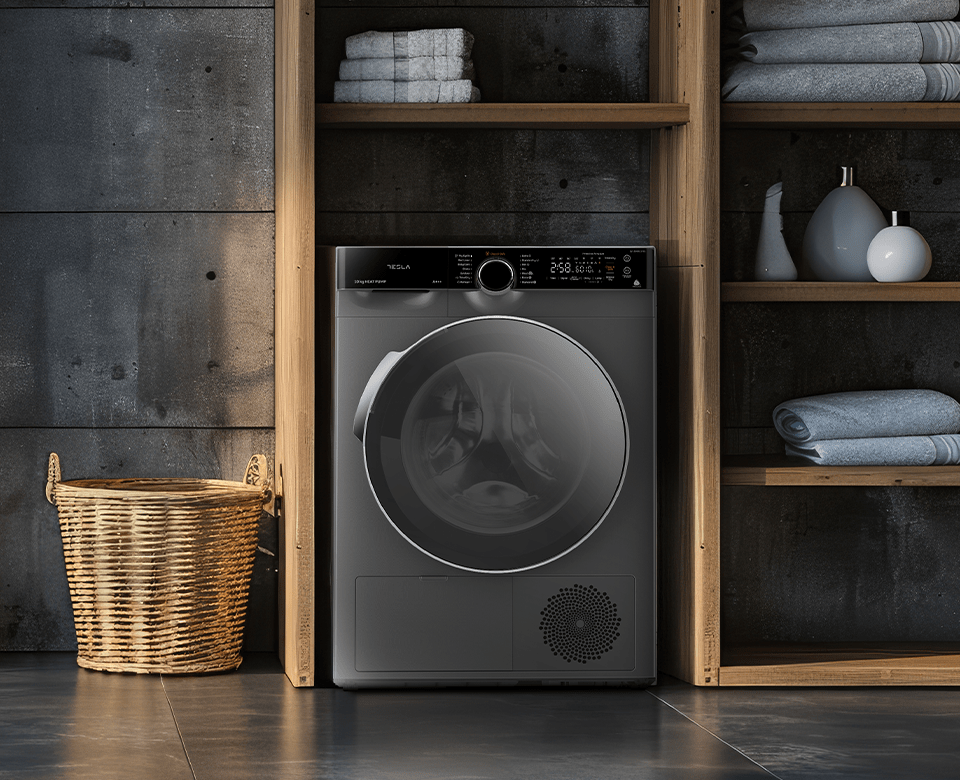
For example, Tesla heat pump dryers are designed for users who want to reduce electricity consumption without sacrificing comfort. Smart sensors and tailored programs enable optimal drying at lower temperatures and with lower energy use, which is especially important during winter.
How much does a dryer really affect your electricity bill?
There is a common belief that a dryer “dramatically increases the electricity bill,” but in practice, a properly chosen and efficient model has controlled consumption.
The biggest electricity consumers in households are often space heaters and water heaters.
If you use a modern heat pump dryer and appropriate programs, the dryer is not the largest energy consumer in the home—even in winter.
Additional tips: How to reduce electricity consumption when drying laundry
1. Increase the spin speed in the washing machine
The drier the laundry before entering the dryer, the shorter the drying cycle.
2. Do not overload the drum
Optimal loading allows for more even and faster drying.
3. Clean filters regularly
A clogged filter can increase consumption by up to 20%.
4. Dry similar materials together
Cotton, synthetics, and towels require different drying times.
So, is a tumble dryer worth it in winter?
In winter, a dryer is often not a luxury but a practical solution—there’s no drying laundry on radiators, which means less humidity and condensation in the apartment. This reduces the risk of mold and significantly saves time.
When used smartly and combined with energy-efficient appliances, a dryer is a rational choice for the winter period.
Energy efficiency class: what does it really mean in practice?
Although energy labels provide good guidance, in real-life use, technology and smart features also play a crucial role.
In modern models, such as Tesla heat pump dryers, energy efficiency is achieved thanks to moisture sensors that automatically adjust cycle duration, avoiding unnecessary electricity consumption.
That is why it is important to choose proven, reliable, and rationally designed appliances. Tesla home appliances are tailored to the real needs of modern households.
If you are deciding between a dryer and a washer-dryer combo, read Which option is the right choice for you.
If you are unsure about the right model, feel free to contact our expert team. We are always at your disposal.