
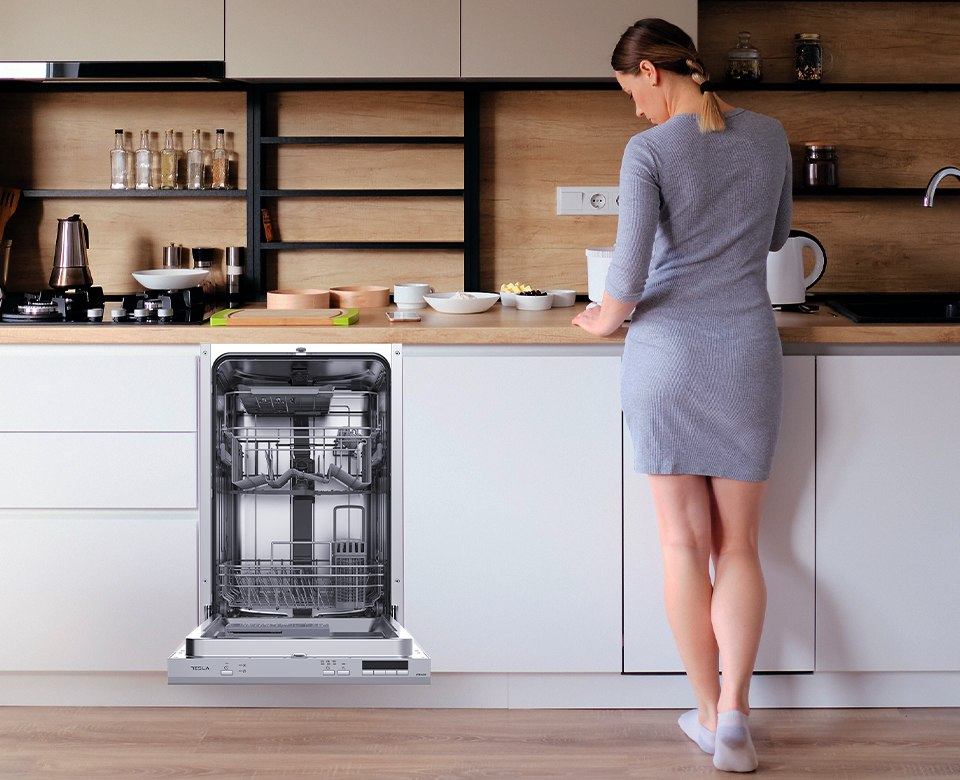
HOW TO CHOOSE A BUILT-IN DISHWASHER: A COMPLETE GUIDE
A built-in dishwasher is no longer a luxury — it has become a practical solution that saves time, water, and energy. However, choosing the right model can be confusing: what washing capacity do you actually need, which programs are truly useful, how important is energy consumption, and does noise level really matter?
In this guide, we explain how to choose the ideal built-in dishwasher through clear criteria and practical examples.
Why Is Choosing the Right Built-In Dishwasher Important?
Built-in dishwashers differ in several key aspects:
- capacity
- number of programs
- energy efficiency
- water and electricity consumption
- noise level
- additional features
Making the right choice means:
- better washing performance
- lower long-term utility costs
- quieter kitchen operation
- longer appliance lifespan
Washing Capacity: How Many Place Settings Do You Really Need?
Dishwasher capacity is measured by the number of place settings.
The most common options include:
- 9–10 place settings — ideal for singles or couples
- 12 place settings — the best choice for smaller households
- 14–16 place settings — suitable for larger families
If you live alone or as a couple, choosing the largest capacity is usually unnecessary. On the other hand, families benefit from larger models, as they allow less frequent washing cycles.
Explore Tesla built-in dishwasher models with different capacities and choose the one that best fits your needs.
Which Programs Do You Actually Need?

Although most users regularly rely on only a few essential programs — Standard, Intensive, Eco, and Quick wash — a wider selection of programs provides significantly greater flexibility in everyday use.
For example, the Tesla WDI691M model offers 7 washing programs, including a dedicated glass program, Rapid mode, and Auto program.
What makes this model particularly practical are features not commonly found in all built-in dishwashers. At the end of each cycle, the door automatically opens to release steam and allow fresh air to enter the appliance. This natural airflow enables faster and more efficient dish drying.
What Do Water and Energy Consumption Mean in Practice?
Many people still believe that dishwashers consume excessive resources, but modern built-in models are optimized for efficiency.
For example:
The Tesla WDI462M uses only 9.7 liters of water per cycle — approximately the amount consumed when washing dishes manually under a running tap for just five minutes.
Energy consumption is also low, averaging around 0.75 kWh per cycle, which is highly efficient for an appliance that both washes and dries a full load of dishes.
With proper use, a dishwasher can therefore be significantly more efficient than hand washing.
Noise Level Matters in Modern Homes
 If you live in an open-plan space where the kitchen connects to the living room, noise level becomes an important factor. The lower the decibel level, the less noticeable the appliance operation will be.
The Tesla WDI691M operates at 44 dB, making it an exceptionally quiet dishwasher.
Maintenance Is the Key to Long Appliance Life
To ensure optimal dishwasher performance:
- clean the filter regularly
- occasionally run an empty cleaning cycle
- avoid overloading the machine
Frequently Asked Questions (FAQ)
Is a built-in dishwasher better than a freestanding one?
A built-in dishwasher integrates seamlessly into kitchen cabinetry, providing a clean and minimalist look, while freestanding models offer greater installation flexibility. The best choice depends on your personal needs and kitchen design.
What dishwasher capacity is best for families?
For families, a 14 place setting model, such as the Tesla WDI691M, is usually the optimal choice.
Does a dishwasher really save water?
Yes. Modern dishwashers typically consume significantly less water than manual dishwashing.